2025: slow to start, with a flurry at the end

2025 has been a very different type of year for not only real estate, but the world in general. Off the back of the 2024 US election, the year started in a measured way, as a delayed federal election (taking place in May) saw a reduced number of properties on the market, as people waited to see what transpired. Once this passed, we moved into winter, a period of the year where the market always tends to slow down.
Things did pick up in August and September, rolling into solid numbers for October and November and is finishing now with a flurry of last minute activity.
Whilst clearance rates were reported as high through the Domain and REIV portals (often around 70-80%), we believe these stats were not telling the complete picture, due to a high number of delayed or unreported auction results. An average home – B or C grade – that was not priced well was hard to sell; in many cases, these homes remain unsold.
Some observations for 2025:
Influx of investment properties
As changes to Land Tax regulations filter through, we have seen more investment properties hit the market. Over the past few years, the rising costs associated with owning an investment property have increased disproportionately to rental payments. Higher interest rates, annual increased land tax bills, council rates, insurances, compliance costs associated with new minimum standards and annual and bi-annual safety checks are eating into (and often now outweighing) any potential capital growth gains.
For many investors, the numbers no longer stack up. In some ways, this has been good for the market, as it has helped with supply, but it is causing a depletion to available rentable stock. We believe home buyers need to be especially cautious in buying such properties. Whilst regulations have meant they need to have heating/cooling/blinds etc, bigger ticket items such as re-stumping, gutters (rusting out due to lack of cleaning), rotting weatherboards and other painted surfaces failing, etc., have often not been maintained. We think a building inspection on such properties is a must.
Planning changes
The de-codifying of the planning process has seen many changes, such as:
- reduced front setbacks (can now build 6m from front boundary, rather than 9m)
- changes to overlooking (ie first floor bedrooms no longer require frosting)
- uniform side setbacks and site coverages (ie. in Bayside you can now build bigger on a second level, in Whitehorse you can build on more of your land)
- faster timelines for simpler projects
- power to issue permits that can breach restrictive covenants
- reducing allowable overshadowing to 50%
- private open space decreased from 40sqm to 25sqm
In addition, much of the second half of the year has been spent discussing new zoning regulations and height controls around many established, south-eastern suburbs.
We are still waiting on clear information and confirmation around zones and height limits, but it has certainly created a degree of alarm and concern to existing residents.
Whether these changes will actually have any immediate impact on suburbs will depend on developers being able to buy/obtain the land and build the properties at a price that is profitable for them (as building costs have not gone down) but also a price that buyers are prepared to pay to live in these smaller properties.
Downsizer demand
Often, we are working with downsizers who are prepared to move into apartments, but we’re not sure the developers are building what buyers want. Many downsizers spend more time at home (not less) because of age and/or health restrictions. Frosted windows, narrow balconies and limited or no natural light is not conducive to a healthy environment. Multiple bedroom/bathroom combinations are perhaps not as important as good sized (and multiple) living areas. And it is really important to get the style and building typology ‘right’ for the area. What works in the inner north doesn’t necessarily resonate with the market in the inner east.
Price quoting
Quoting has remained a topic of contention, with the government, proposing a ‘reserve reveal’ date, seven days prior to any auction dates or fixed date private sales (ie expressions of interest) campaigns. Whilst on the surface some may think this is a good idea, there are two parties to a transaction and some consideration needs to be given to the vendor and what is in their best interests, particularly given they are the ones paying for the agent to sell the property, and get as much money as they can for what is often their biggest financial asset. Should the new reserve disclosure rules come into play, we may see an end to, what is still, the most transparent way to buy property in Melbourne.This is likely to lead to more ‘smoke and mirror’ processes and even more confusion for buyers. Or worse still, the death of the auction system in Melbourne.
We believe there is a simple solution that would eliminate confusion, uncertainty and conflict. Agents should only be able to work for one party – a selling agent should represent vendors exclusively and a buying agent should represent buyers exclusively.
Very clear, very simple. That way each party is acting, exclusively, in their clients’ best interests.
Interest rates
It seems the direction of interest rates will remain uncertain as we head into the new year, adding more stress for some vendors and buyers.
New regulations
Next year will also see the introduction of new ‘anti-money laundering and counter-terrorist financing’ regulations. The responsibility for managing and reporting will fall on professional services including real estate agents and buyer advocates, adding another lay of complexity to the transaction process. We are still learning whether, or how, this may impact buyers and sellers.
Where to from here?
With the year closing in, many agents are signing off early, with Saturday their final auction weekend before commencing an extended break for summer.
Looking forward, 2026 should commence well. We hope to see good stock levels for both February and March, with the first campaigns kicking off on or after the Australia Day weekend.
As we wrap up our Market Pulse for the last time this year, we note some of the difficulties for all participants in the market and hope for a less tumultuous year in 2026.
For buyers, the events of this year have added greater complexity to a property market that is already heavily weighted in the vendor’s favour.
If 2025 hasn’t resulted in the purchase success you were hoping for, consider engaging the services of a buyer advocate in the new year. Look for one that is independent and works exclusively for you, the buyer.
Thank you for reading and following us this year. We appreciate the support.
Our offices will be closed from Friday 19 December 2025, re-opening on Tuesday 20 January 2026.
We wish you all a Merry Christmas and a happy and safe holiday with your family and friends.
‘Pre-market’ or ‘Off-market’ Properties:
- Freestanding Victorian 2-1-1, ~280sqm, Prahran – circa $1.75m
- Brick Edwardian, 5-3-4, ~1,000sqm, Malvern East – circa $2.75m
- Brick Edwardian 4-3-4, , ~1,200sqm Hawthorn – circa $11.5m
- Weatherboard single fronter, 3-3-2, ~630sqm, Windsor – circa $3.65m
- Edwardian, 4-2-2, newly renovated, Gascoigne, Malvern East – circa $4.2m
- Dramatic modern family hoe, 5-3-2, Northcote – circa $3.75m
- Pretty Victorian, 4-1-1, near amenities, Clifton Hill – circa $2.25m
- Large contemporary family home, 5-4-4, pool, Camberwell – circa $5.25m
- Modern 3-2-2 on ~430sqm, Kew – circa $2.3m
- Cal Bung, 2-storey, needing updates, 5-3-2, Hawthorn East – circa $2.55m
- 1950s family home, 4-3-2, pool ~740sqm, Glen Iris – circa $2.65m
- Single level 4-2-2 family home, McKinnon – circa $2.65m
- Newly renovated Cal. Bung, 4-3-2, pool, Ormond – circa $3.0m
- Block of 5 renovated apartments, 12 beds, Elwood – circa $5.25m
- Classic 2-storey family home, 5-3-2, pool, Brighton East – circa $4.2m
- New home site near Bay Street amenities, Brighton – circa $3.0m
- Period weatherboard w court & pool, Hampton – circa $4.5m
- New family sized TH, near beach and shops, Beaumaris – circa mid $2ms
Auction Spotlights:

37 Denham Street Hawthorn
Quoted $4.5-4.9m
Started $4.825m
Ended $5.8m
Bidders 4
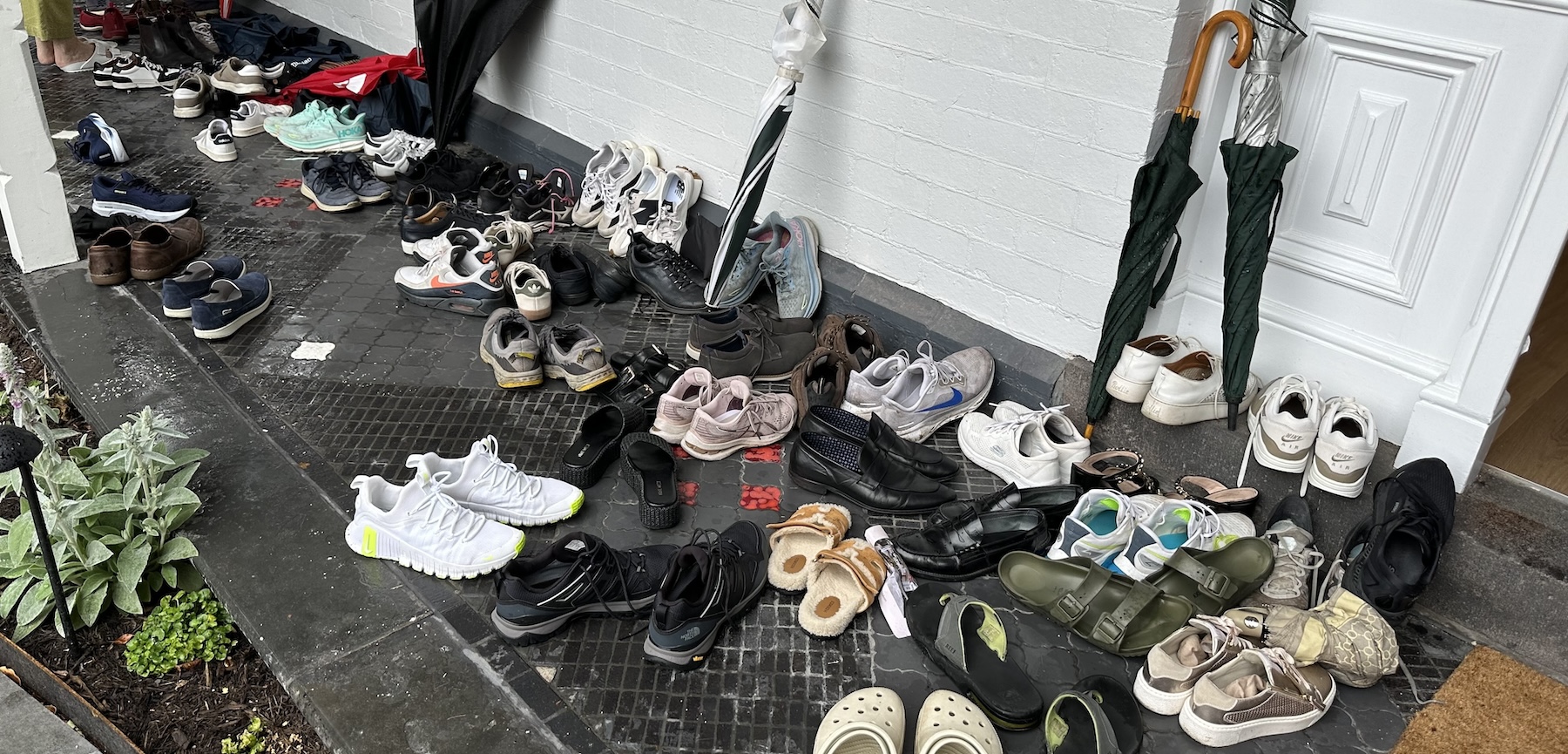
A wet and cold December morning meant this auction needed to be held inside; luckily this home had good-sized front formal rooms to accommodate comfortably a crowd of about 80 people. On offer was a solid Italianate Victorian home with reasonable volume and good covered parking – north facing rear, opposite St James Park. House is very livable for now, but would benefit from renovation down the track. Auctioneer Doug McLauchlan conducted the auction really well (experience counts!), facilitating offers from 4 bidders. The auction opened at $4.825m, was announced on the market at $5.075m then ultimately sold for $5.8m. A strong result, but such good offerings do not come along too often and the market responded accordingly.
24 Glendearg Grove Malvern
Quoted $6.0-6.5m
Started & passed in $6.0m VB
Last purchased in very original condition in 2022 for $3.4m, this brick Edwardian has been entirely transformed. The original rooms have been retained and restored at the front, with a modern 2 storey rear replacing the old. A pool has also been added, alongside the garage accessed from the rear ROW (this perhaps a little tight).
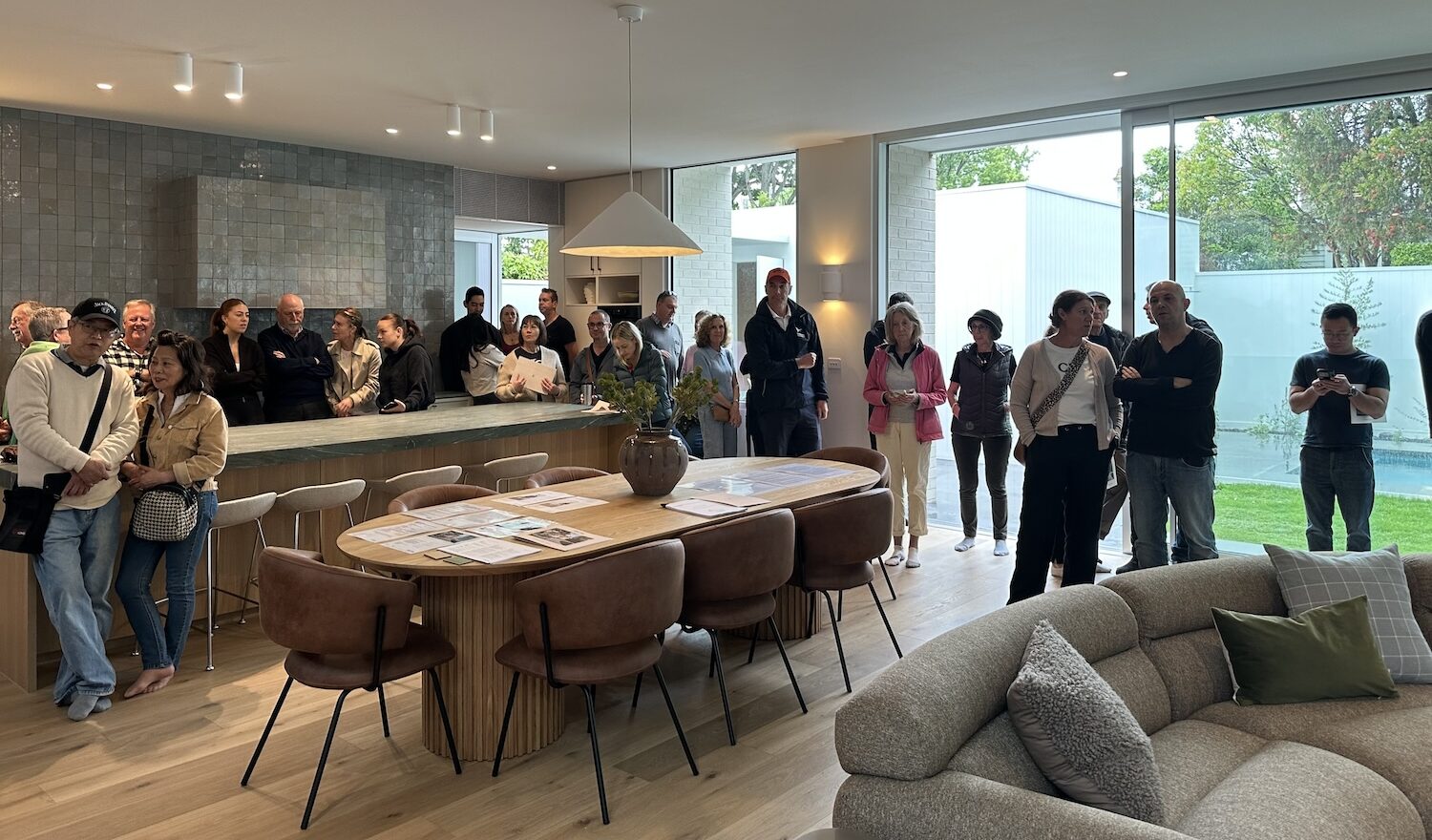
While many observers crowded the open plan rear as the rain fell outside, it seemed no one was prepared to truly participate in the auction. David Sciola started off proceedings with a vendor bid of $6.0m and that’s where it stayed. Although the renovation was all encompassing and visually stunning, perhaps an example that if you don’t get a renovation spot on, people may not pay what you are after to cover your costs (and more).